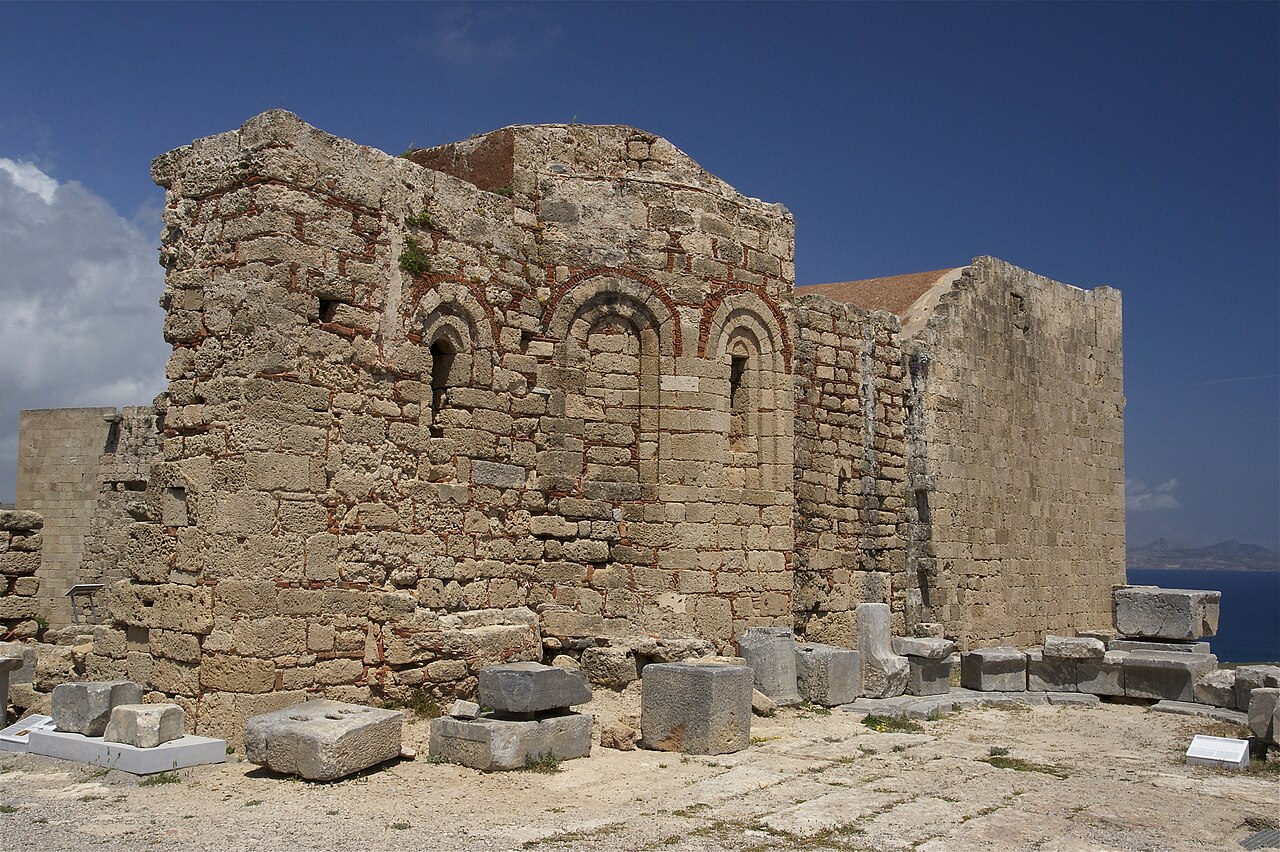
Classical and Hellenistic Rhodes
Ancient Rhodes flourished as a maritime power allied with Ptolemaic Egypt. The city sponsored athletic games and produced philosophers; remnants of the Colossus harbour quarter appear in harbour excavations.
Lindos, Kamiros and Ialysos formed the island's Doric city-states. Hellenistic sanctuaries and propylaea at Lindos demonstrate wealth from Aegean trade routes.
The Colossus of Rhodes — one of the Seven Wonders — stood near the harbour; exact location remains debated among archaeologists.
Roman and Early Byzantine Eras
Rhodes integrated into the Roman Empire as a free city with continued maritime importance. Public baths, odeons and temple conversions illustrate imperial urban investment.
Early Byzantine churches introduced basilica plans later modified during Crusader rebuilding. Mosaic floors survive at archaeological museums and rural sites.
Crusader and Hospitaller Rule
After the Fourth Crusade, the Knights of St John fortified Rhodes into a Gothic stronghold against Ottoman advance. Walls, moats and bastions encircle the Old Town still inhabited today.
Hospitalier rule (1309–1522) left Inns of Tongue, armouries and the Palace of the Grand Master — key stops on heritage itineraries.
Read more: Medieval City of Rhodes UNESCO site
Ottoman and Italian Periods
Ottoman administration added mosques, baths and market structures within Crusader shells. Synagogues reflect Sephardic refugee communities under Suleiman's tolerant policies.
Italian Rhodes (1912–1943) restored medieval monuments and introduced art deco suburbs. Post-war integration into Greece preserved conservation frameworks established under Italian heritage law.
Modern Heritage Management
Greek archaeological service and EU funds maintain sites across the island. Interpretation panels link periods for visitors arriving via Rhodes airport and ferry ports.
- Museums: Archaeological Museum in Old Town
- Tickets: Combined passes for palace and walls in peak season
- Research: Italian and Greek joint publications on Hospitaller architecture