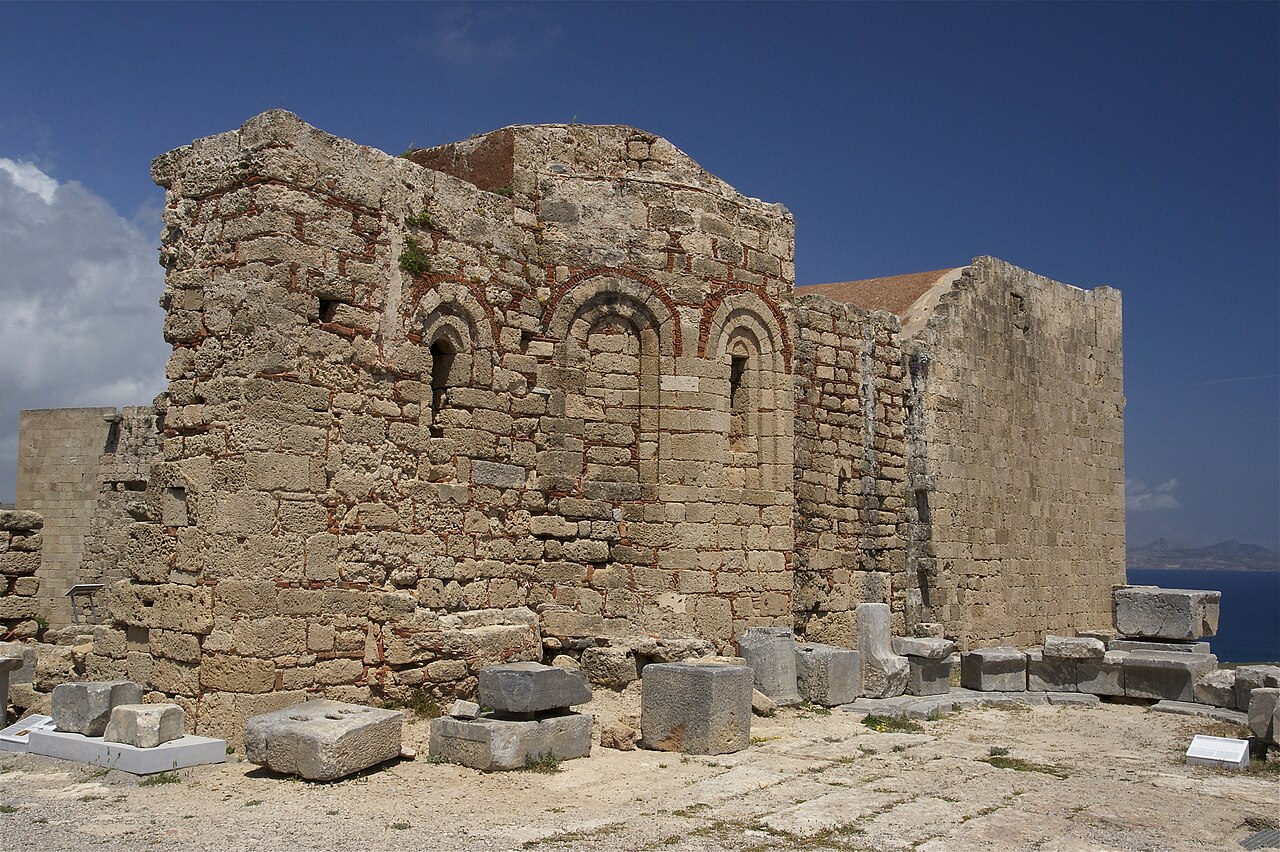
Rhodes in the Byzantine Empire
Rhodes belonged to the Theme of the Aegean with naval responsibilities against Arab raids. Fortifications upgraded in the 7th–10th centuries preceded later Crusader walls.
Trade continued in ceramics and silk; harbour customs records appear in Constantinopolitan archives cited by modern historians.
Churches and Fresco Programmes
Rural churches such as Agios Georgios Hostos preserve fresco layers from Byzantine and post-Byzantine periods. Iconostasis traditions influenced later Orthodox practice under Ottoman tolerance.
Restoration conservators document pigment analysis and humidity control for cliff-side chapels exposed to salt air.
Transition to Crusader Rule
Byzantine weakness after 1204 enabled Genoese and Hospitaller presence. Many churches converted to Latin rite or shared spaces before Ottoman reconquest normalized Orthodox parish life.
Mixed rite periods complicate architectural attribution — specialists use masonry and mortar dating.
Ottoman Era Orthodox Communities
Patriarchal jurisdiction continued with metropolitans based in Rhodes town. Church bells and wall paintings renewed community identity alongside mosques in the multicultural Old Town.
Modern Orthodox Life
Feast days and Easter processions maintain living traditions in villages and Old Town parishes. Pilgrimage routes link rural chapels during panigyria festivals.
- Museum icons: Archaeological Museum collection
- Living parishes: Respect services when visiting
- Conservation: EU-funded fresco stabilisation projects