Sacred Precinct and Athena Lindia
The Doric Temple of Athena Lindia crowns the acropolis, rebuilt after Alexander-era fire. Propylon stairways and stoa foundations frame processional routes documented in Hellenistic inscriptions.
Ancient writers including Strabo referenced Lindos's maritime sanctuary role — sailors vowed offerings before Aegean crossings.
Medieval Castle Overlay
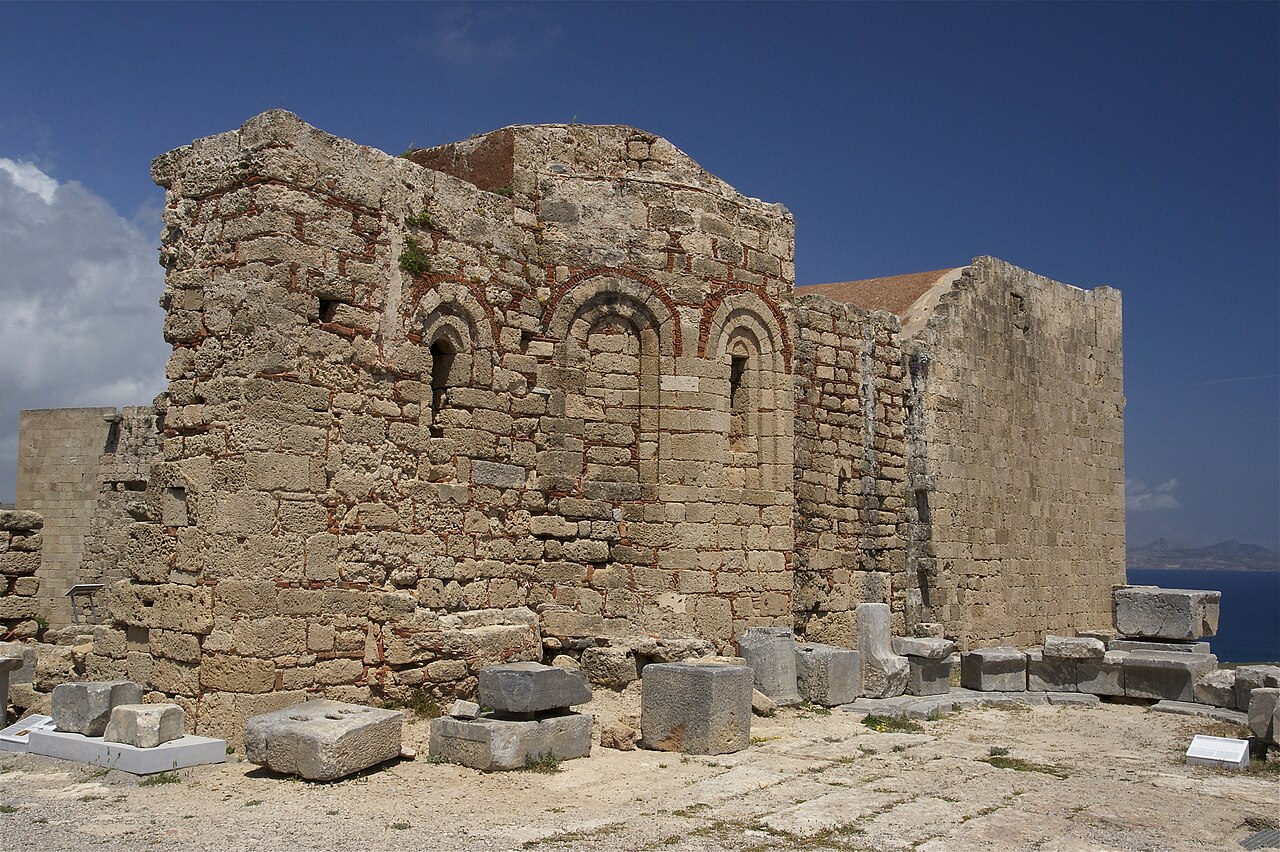
Crusader knights fortified the acropolis with walls enclosing earlier temples. Gate sequences and cisterns supplied garrisons during Ottoman sieges of Rhodes town.
Ottoman and Italian restorations stabilised masonry; modern paths guide visitors through mixed ancient and medieval fabric.
Wear sturdy shoes; the ascent from Lindos village involves steep paths and sun exposure — visit early morning in summer.
Lindos Village Context
Whitewashed houses and pebble-mosaic courtyards climb toward the acropolis. Captain's houses with carved doorways reflect nineteenth-century shipping wealth.
Municipal regulations preserve facades and restrict vehicle access — donkeys and walking remain primary hill access for tourists.
St Paul's Bay and Coastal Setting
St Paul's Bay — associated with apostolic landing traditions — offers swimming below the acropolis cliffs. Geology combines limestone karst with sandy coves.
Boat excursions link Lindos to southern beaches including Kiotari, distributing visitor pressure beyond the acropolis peak hours.
Related: Kiotari and the southeast coast
Conservation Challenges
Visitor numbers stress paths and temple foundations; timed ticketing and rope barriers protect fragile areas. EU projects fund drainage improvements reducing erosion on slopes.
Local guides interpret chronology for cruise-ship day trippers; academic excavations continue on peripheral sanctuaries.